More than 1,000 participants from across Greece joined the three training cycles
With exceptionally high participation and representation from across Greece, the third and final cycle of the E-learning programme “Circular Economy for Educators” has been successfully completed, marking the conclusion of the distance learning programme implemented within the framework of the LIFE-IP CEI-Greece project, “Circular Economy Implementation in Greece”, coordinated by the Ministry of Environment and Energy (MEEN).
The comprehensive training programme was implemented by the DAFNI Network of Sustainable Greek Islands, the Ministry of Environment and Energy, the Green Fund, Harokopio University of Athens, the Ecological Recycling Society, Terra Nova and the Hellenic Recycling Agency. Its aim was to empower three professional sectors that are expected to play a key role in implementing the Circular Economy in Greece.
The three thematic training cycles were successively addressed to Local Authorities (October–December 2025), the Tourism sector (February–April 2026) and the Education sector (May–June 2026), attracting a total of more than 1,000 participants from across Greece. The particularly high level of participation confirms the growing interest in the Circular Economy, as well as the need for targeted capacity-building actions that strengthen the knowledge and skills of those called upon to design and implement the green transition in practice.
The programme’s final webinar was held on Wednesday, 17 June, featuring an engaging panel discussion entitled “Challenges and Opportunities for Implementing the Circular Economy in Education”. The panel brought together Kostas Abeliotis, Professor at Harokopio University of Athens; Andreas Sotiropoulos, Environmental Scientist at Terra Nova; Stavros Karagiannis, Electronics Engineer at the Ecological Recycling Society; Dr Roubini Marini, Deputy Director of Research, Prevention & Communication at the Hellenic Recycling Agency; and Katerina Giannakoula, Environmental Scientist at DIADYMA. The discussion highlighted the main challenges and significant opportunities for integrating the Circular Economy into school life, with participants sharing the view that education can serve as a powerful driver of change by fostering sustainability-related knowledge, attitudes and behaviours.
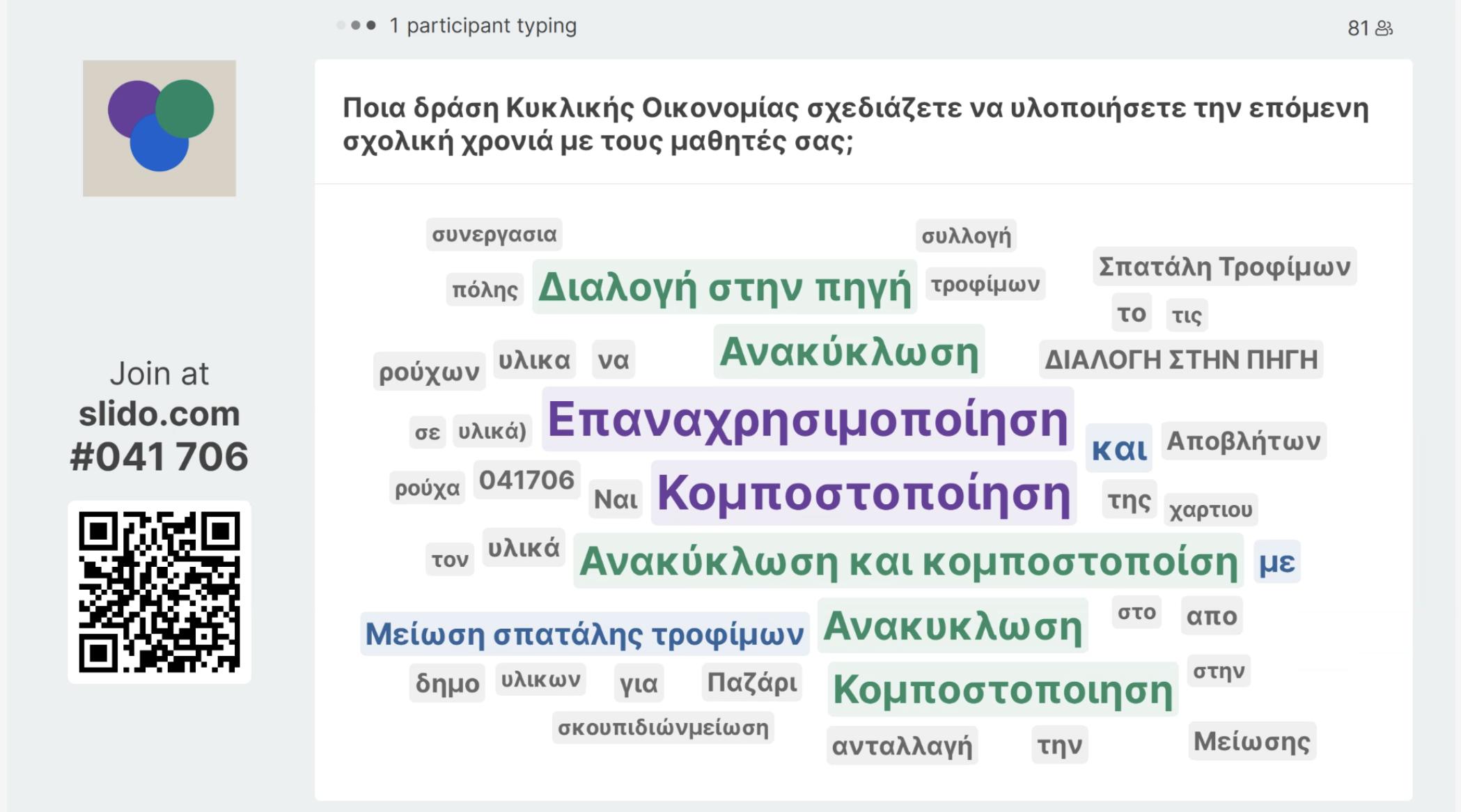
Participation in the third cycle was remarkable, with 472 primary and secondary school teachers from almost all subject areas actively taking part in the programme. This strong response confirms that the Circular Economy is a multidimensional subject that can be creatively integrated across all fields of learning and into the day-to-day operation of schools. Through the programme, participants gained up-to-date knowledge and practical tools for incorporating Circular Economy principles into teaching, implementing waste prevention, reuse and proper waste management initiatives, and applying good practices that contribute to reducing the environmental footprint of schools.
With the completion of all three training cycles, the LIFE-IP CEI-Greece project leaves a significant legacy of knowledge and good practices for advancing the Circular Economy in Local Government, Tourism and Education. The programme’s great success confirms the importance of capacity-building actions and provides grounds for optimism that the knowledge, tools and experience generated by the project will continue to be transferred and put into practice, strengthening Greece’s transition towards a more circular and sustainable future.
Read here the Press Release.

